
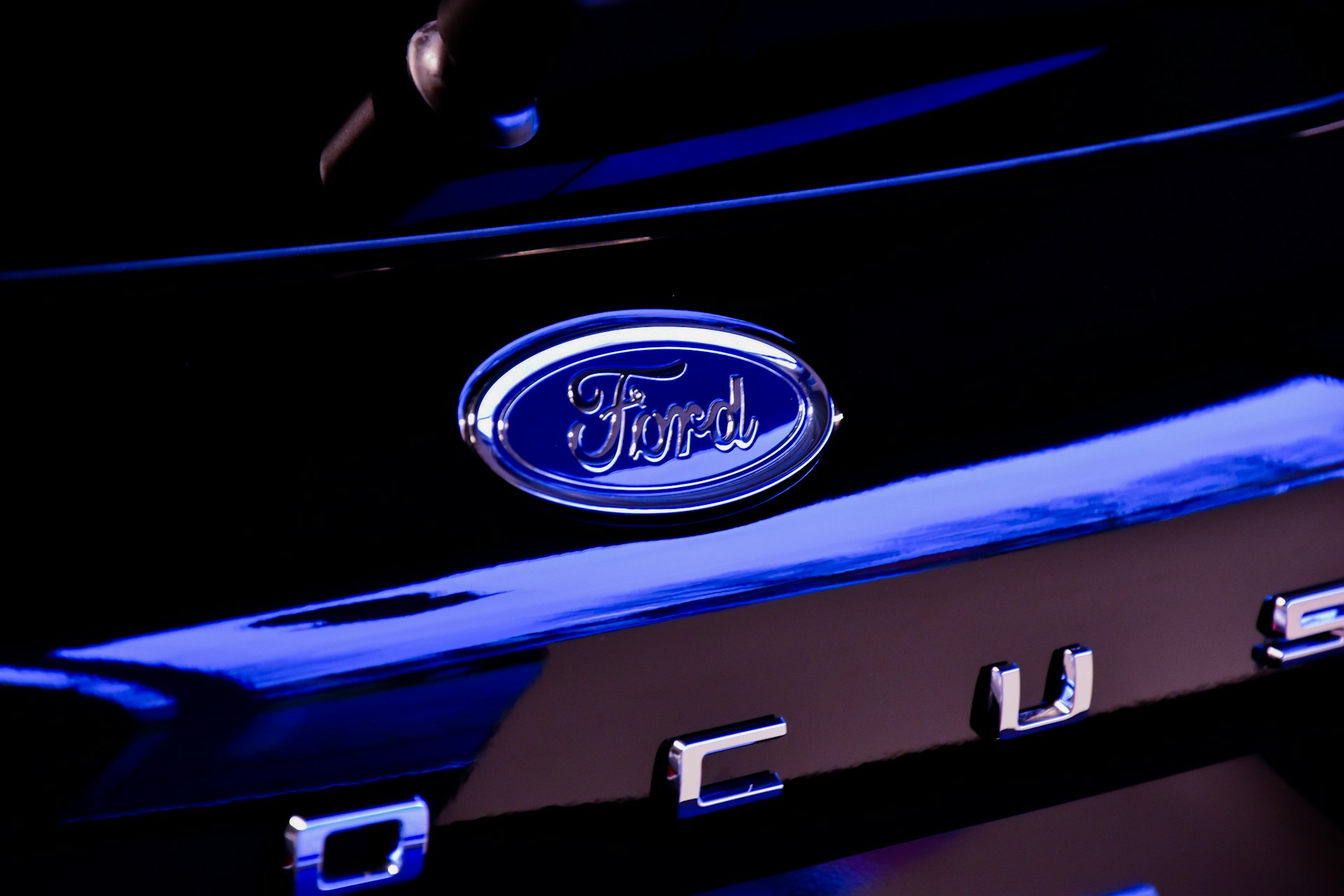
Ford is drastically reshaping its European line-up, swapping decades of traditional family hatchbacks and estates for chunky, American-flavoured SUVs. The clearest signal of this pivot came recently when Ford boss Jim Farley hinted that a forthcoming European crossover will wear the fabled Bronco badge. Set to arrive in 2027 as an indirect replacement for the recently retired Focus, this new model underscores a major shift in the Blue Oval’s global strategy.
American Brawn for the British Market
Speaking at the Detroit Motor Show, Farley suggested the media hadn’t quite grasped the global rollout of the Bronco nameplate, confirming the brand has significant worldwide ambitions for the rugged 4×4 moniker. Expected to break cover next year under the guidance of Europe boss Jim Baumbick, the new SUV will be produced in Valencia alongside the Kuga.
Despite sharing the Kuga’s C2 platform, the new arrival will be heavily differentiated. Buyers can expect a bespoke, straight-edged silhouette mirroring the US-market Bronco and the recently launched electric Explorer, leveraging Ford’s American heritage to stand out in a crowded market. Given the current cooling of the EV sector, Ford plans to stick with combustion power for this crucial new model, offering a plug-in hybrid variant with no pure-electric version currently in the pipeline.
The Legacy Fleet: Comfort with Caveats
As Ford leans heavily into this high-riding, boxy future, the traditional load-luggers that once dominated Britain’s motorways are firmly being relegated to the used car market. The Mondeo, long the default choice for families and high-mileage sales reps, is a prime example of the era Ford is leaving behind. While it remains a highly capable and comfortable cruiser, recent reliability data from the German TÜV—broadly equivalent to our MOT—suggests buyers looking for a second-hand bargain need to keep their wits about them.
The fifth-generation Mondeo, sold between 2014 and 2022, brought a dash of executive flair to the segment. Originally launched in the US as the Fusion, it offered buyers luxurious touches like panoramic roofs and leather upholstery alongside incredibly plush seating. It eats up motorway miles effortlessly, though the boot is noticeably smaller than its predecessor’s. However, the inspection data highlights a rather long list of foibles. Owners frequently report irritating cabin creaks, particularly around door hinges. More worryingly, long-term tests have flagged failures with intercoolers and electronic tow-bar modules, while official recalls have had to address loose glass roofs, overheating engines, and fragile clutch pressure plates.
The Heavyweight Predecessor
Looking further back at the Mk4 Mondeo, built from 2007 to 2014, you find an absolute heavyweight of a family estate. Nearing the width of an older Mercedes S-Class, it boasts a cavernous boot capacity of up to 1,745 litres and once routinely outperformed the VW Passat in group tests. Under the bonnet, the punchy TDCi diesels are incredibly common but do suffer from noticeable turbo lag.
Age has inevitably started to show its hand here. The TÜV inspectors point out that while the suspension holds up surprisingly well across both generations, the Mk4 is increasingly prone to steering joint wear and electrical gremlins. These often manifest as immobiliser faults and crashing CAN-bus systems. Shoddy seat mounts, rapidly wearing upholstery, and blocked particulate filters are also frequent headaches for the older diesels.
Thankfully, rust doesn’t seem to be a widespread issue for the newer Mk5, though drive shaft failures can occasionally strike either model. Ultimately, the contrast couldn’t be starker. Motorists are currently watching Ford trade the vast, practical, albeit slightly flawed estates of the past for the hybrid-powered off-roaders of tomorrow.