
Welcome to the first true harbinger of the modern Ford: the all-electric new Explorer. The reimagining of the Blue Oval as it lurches towards widespread electrification has been swift and, at least here in Europe, rather brutal. The Fiesta, a perennial favourite on British roads, has ceased production entirely, and the final Focus is scheduled to depart the Saarlouis plant in November 2025. These high-volume, low-margin staples are being swept aside, replaced by crossovers such as the Puma and the subject of this road test: the new Explorer.
Consequently, the mainstream, mass-market family Ford now takes the form of a £40,000-plus electric crossover. Crucially, its core attributes have been defined not in Dunton or Cologne, but in Wolfsburg. Beneath the metal, the Explorer sits on Volkswagen’s MEB platform—the tangible result of a technology-sharing pact finalised in 2020. Ford claims this partnership shaved two years off the development time, a handy advantage when you are scrambling to compete in a crowded, burgeoning segment after being notably slow off the mark.
A Wolfsburg Foundation
It is perhaps unsurprising that the MEB architecture serves as a transitional tool. It facilitates the Explorer and its coupé-styled sibling, the new Capri, but will eventually make way for proprietary Ford hardware. To us, this appears a bold strategy, even if Ford had little economic choice but to pursue this path. The historic appeal of the marque has always rested on a balance of affordability and likeability, with the latter derived from carefully honed dynamics and a quietly satisfying driving experience, regardless of engine size or specification.
Now, with a pivotal product that will define Ford’s reputation in the medium term—far more so than the larger, pricier Mustang Mach-E—the core engineering has effectively been outsourced. If the Explorer proves to be little more than a rebodied Volkswagen ID.4, it would represent a betrayal of Ford’s back catalogue of brilliant ‘ordinary’ cars. Conversely, if it retains its own personality and that typical Ford spirit, it will go down as a savvy, significant move.
The car’s gestation has not been without its hurdles. It was delayed and re-engineered to accommodate more advanced battery technology. Furthermore, Martin Sander, who steered the company throughout the vehicle’s development, departed for Volkswagen just a week before the first test drives.
On The Road and In The Metal
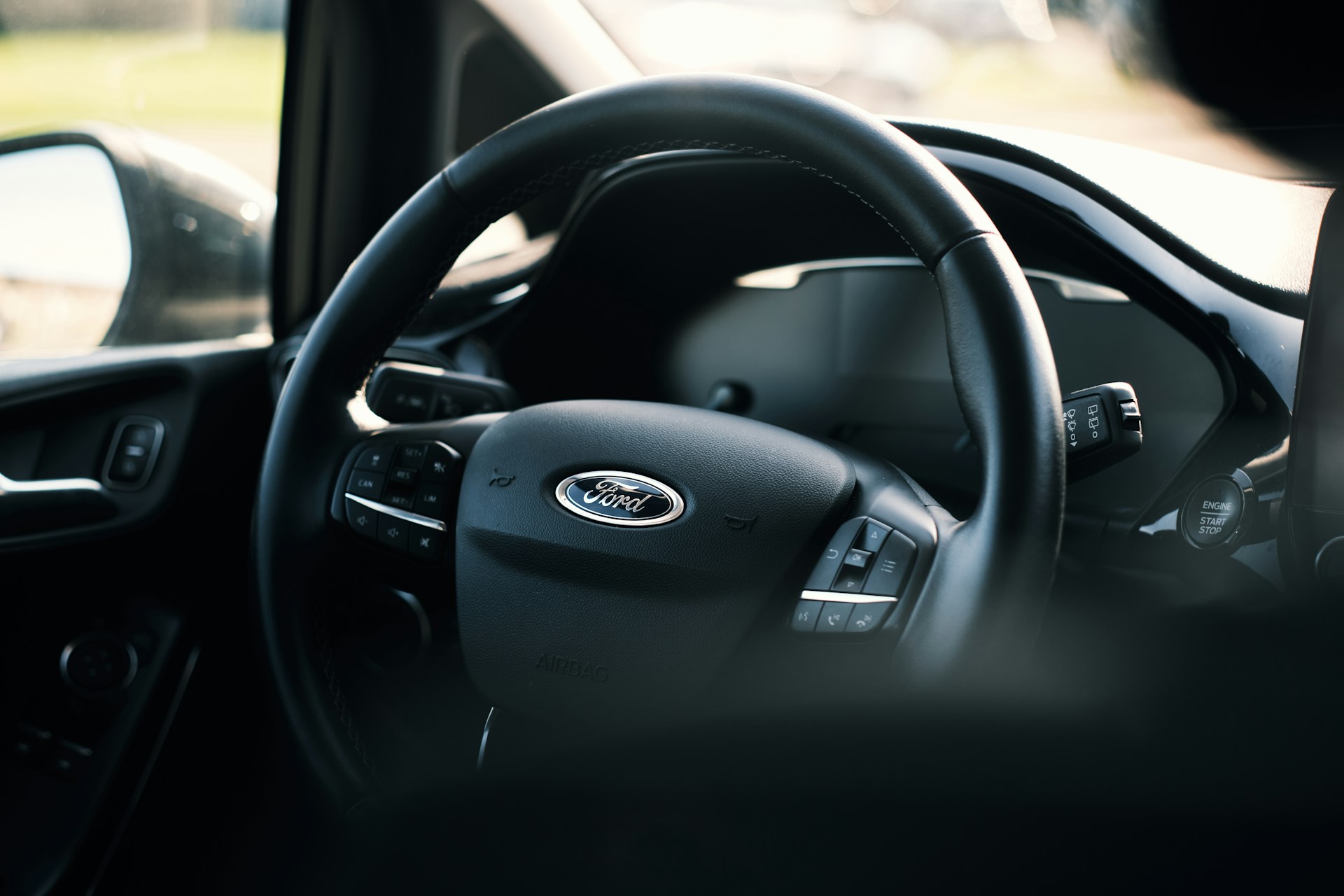
Was the turmoil worth it? On balance, yes. The Explorer offers easy drivability and neat handling, proving itself better to drive than many of its rivals and faster than the claimed figures suggest. It also boasts commendable everyday powertrain efficiency. However, it is not without faults; the cockpit feels somewhat uninspiring with merely average infotainment, and the blend of ride and handling doesn’t quite reach the dizzying heights of Ford’s traditional standards.
A clean-sheet design for the car replacing the Focus would have been preferable, but for the aforementioned reasons, that wasn’t to be. Genetically, the Explorer is an ID.4, sharing a very similar footprint. However, Ford has opted for a pronounced two-box silhouette with a clipped rear overhang that, to our eyes, possesses a playful charm and is far more interesting to behold than its streamlined German cousin.
Market Availability and Specifications
As Ford ramps up operations—having spent $2 billion converting the old Fiesta assembly line for this new era—dealerships are beginning to showcase the breadth of the brand’s current capabilities. For prospective buyers analysing the current market, specific high-specification examples are appearing with robust equipment lists.
Take, for instance, a current listing from Oskar Schmidt GmbH in Austria, which highlights the sort of premium packaging available to order. This particular example, finished in Agate Black Metallic, is listed with a recommended retail price of €103,581. It is a substantial machine, featuring a 3.0-litre engine delivering 239 PS and mated to an automatic transmission. While the new Explorer focuses on electric efficiency, this specific inventory highlights a different beast entirely, with a combined fuel consumption of 10.2 l/100 km and a ‘Transporter’ body designation.
Financing options for such a vehicle are currently structured with a €25,900 deposit and a monthly rate of €765 over 48 months, assuming a residual value of €34,500.
Equipment and Technology
The specification on these top-tier models is comprehensive. The technology suite includes intelligent adaptive cruise control with speed limit indication, a 360-degree camera with ‘Split View’, and a blind-spot assistant that accounts for trailers. Practicality is addressed via a 13-pin tow hitch, reverse brake assist, and a parking pilot system that visualises the trailer’s path.
Inside, comforts are plentiful, including an inductive charging station for mobile devices, a 400-watt voltage converter, and a premium audio system. The driver is served by a 12-inch multifunction display and an 8-inch digital instrument cluster. Exterior touches are equally rugged, featuring 20-inch alloy wheels in Asphalt Black Matte-Silver, a rear locking differential (100%), and a sport bar, alongside practical additions like a manual load compartment roller blind and steel engine protection.