
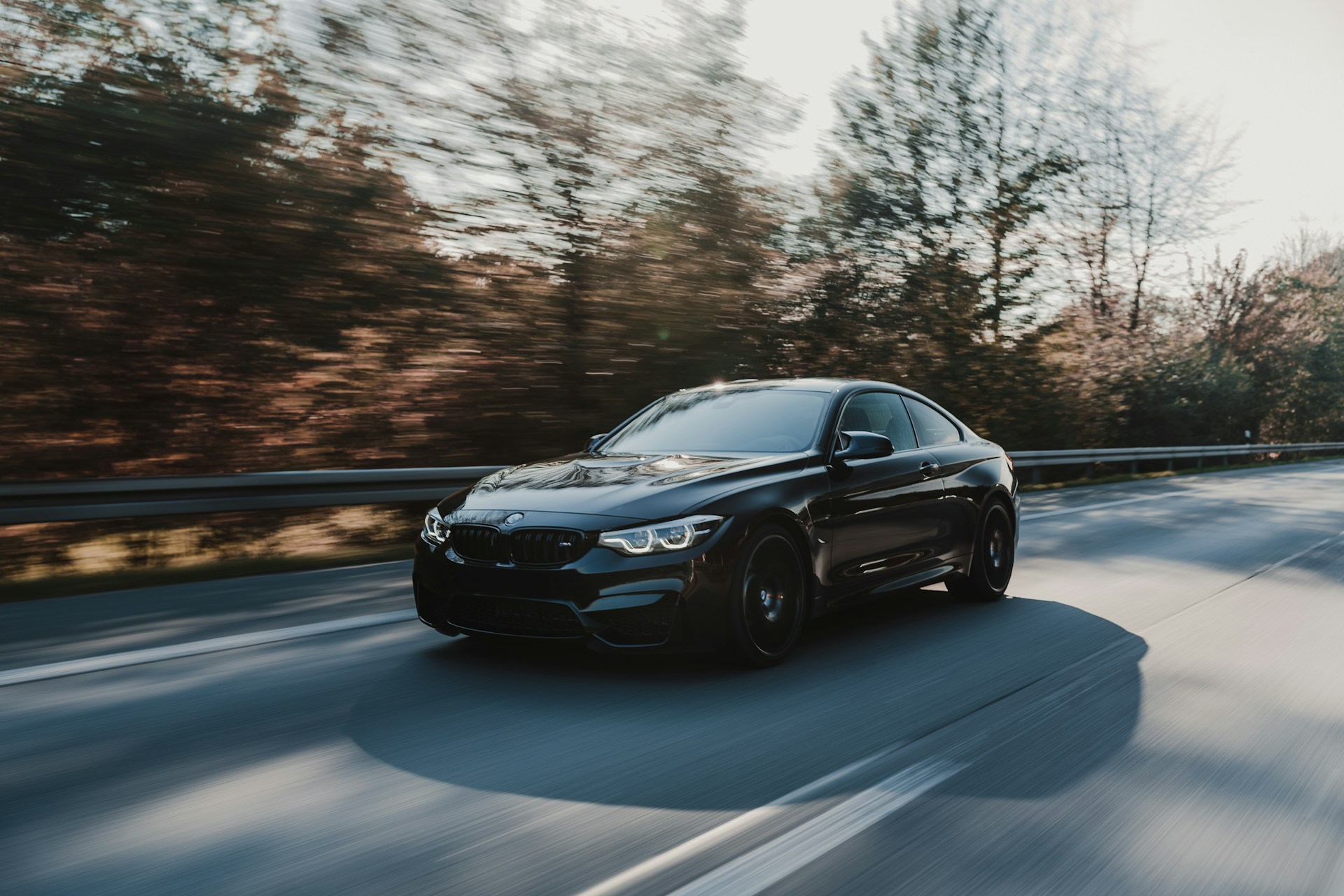
There remains a stubborn faction within BMW’s ranks still nursing a quiet grudge over the firm’s refusal to build a proper successor to the 1978 M1 supercar. They firmly believe a dedicated lineage—a second, third, and fourth generation—would have cemented the brand’s halo in much the same way the timeless 911 has done for Porsche. You can only imagine their initial delight when whispers of a second bespoke M car finally began swirling in the 2010s, followed swiftly by the absolute gut punch of realising this new flagship would manifest as a colossal, plug-in hybrid SUV.
To properly understand what’s been lost in translation over the decades, you only need to look at what Munich used to be capable of when letting its engineers off the leash. Take Wolfgang Körner and his beloved BMW Z1. The 61-year-old from Bogheim owns one of just 8,000 ever built, a rare survivor of an era when the company genuinely cared about lightweight innovation. Körner caught the bug working at an Aachen BMW dealership back in the late eighties. The Z1 was prohibitively expensive upon its 1989 launch—setting buyers back a hefty 82,000 D-Mark, soon rising to 89,000 due to demand—but its mechanical charm is ageless.
It wasn’t until 2006 that Körner finally got his hands on one, though he promptly returned it after discovering hidden accident damage. Six months later, he struck gold with a pristine, first-owner 1990 model painted in the official, rather evocative urgrün (primordial green), with barely 24,000 kilometres on the clock. Körner reckons there are only four or five of them left roaming the greater Aachen area out of the roughly 3,000 registered in Germany.
The Z1 is a masterclass in hand-built driving purity. Tipping the scales at a mere 1,250kg, it features a 2.5-litre, 170bhp front-mid engine pushed well behind the front axle. It’s not about raw, tarmac-tearing power; it’s about near-perfect balance that allows you to carry serious momentum through the bends. And then there are those party-piece doors that drop down seamlessly into the side sills. Cruising around with the doors dropped on a blistering 30-degree summer’s day provides an utterly unique, unfiltered rush of air. It’s the ultimate alfresco driving experience, albeit a bit chilly if the temperature drops below 25 degrees.
It is exactly that sort of whimsical, driver-first engineering we find ourselves desperately longing for when staring down the barrel of the new BMW XM. We’ve waited three years to subject this immensely divisive machine to a proper UK road test, and frankly, it is a stark departure from the featherweight joy of Körner’s Z1.
To be fair to BMW, luxury performance SUVs are the cash cows currently propping up the balance sheets of illustrious marques. You only have to look at the Porsche Cayenne or the Aston Martin DBX to see that big, heavy 4x4s can, grudgingly, be brilliant driver’s cars. Knowing the dark magic the M division works on full-size saloons, an M-fettled SUV makes cold, hard business sense.
But then you actually look at the thing. The brutalist, caricaturish silhouette, the rising beltline, and that prodigiously wide rear end make it a genuinely tough pill to swallow. Looks matter in the six-figure price bracket, and it’s telling that the XM is currently the slowest-selling car in BMW’s line-up now that the i3 is dead.
We are testing the ‘entry-level’ XM 50e, which arrived in 2023 as the slightly more wallet-friendly option at £113,000. Pop the bluff bonnet, and you won’t find the fire-breathing twin-turbo S58 straight-six from the M3. Instead, it makes do with the milder, single-turbo 3.0-litre B58—an engine you’ll also find doing honest toil in the Ineos Grenadier. Paired with a permanent magnet synchronous motor integrated into the ZF eight-speed auto, it produces a combined 469bhp, up from the engine’s base 308bhp.
Which sounds like plenty of shove, until you put it on the scales. The 50e weighs a frankly staggering 2,639kg. That makes it nearly 40 kilos heavier than a long-wheelbase Bentley Bentayga and 93kg heavier than a V8 Range Rover Sport SV, despite the Brit having more cylinders and serious off-road hardware. Granted, there’s a near-30kWh battery pack slung under the rear seats to somewhat justify the heft, and the resulting 52% rear weight bias is actually spot-on for handling in a class where most rivals are hopelessly nose-heavy.
Yet, downstream lies the real kicker. Unlike the flagship 644bhp V8 XM, the six-cylinder 50e completely lacks the proper torque-vectoring M Sport differential. Instead, it relies on a simpler multi-plate clutch to shuffle power front to rear, pinching the brakes to simulate torque vectoring. For a bespoke M car, that feels like a glaring omission.
BMW unquestionably knows how to disguise mass and fine-tune electronic chassis systems; the current PHEV M5 is proof enough that they can orchestrate heavy machinery to dance. But driving the XM 50e, one can’t help but feel utterly detached from the tactile brilliance of the firm’s past. Is it an emphatic dynamic statement, or just a bit of an M-barrassment? When you remember the sheer, wind-in-your-hair joy of a hand-built 90s roadster with vanishing doors, the hulking, isolated reality of the XM leaves us pining for a time when BMW built cars to thrill the driver, rather than appease the accounting department.